How to Choose the Perfect Specifications for Your Medieval Kit
When you decide to invest in a piece of medieval chainmail armor—whether it is a full-length hauberk, a protective coif, or aventail—you quickly realize that choosing the right metal or closing method is only half the battle. As you browse through different options, you will instantly encounter technical numbers like 16 Gauge, 17 Gauge, 18 Gauge, 8mm, and 9mm.
If you don’t come from a metalworking background, these numbers can look like a completely different language. Does a higher gauge number mean thicker metal or thinner? Is a smaller ring size better for protection, or does it just add unnecessary weight? Choosing the wrong specifications can leave you with armor that is either too heavy to wear or too weak to survive a historical reenactment. Let’s break down everything you need to know about wire gauges and ring sizes in plain, simple terms.
Ready to Upgrade Your Medieval Kit? Don’t gamble your safety or money on incorrect specifications. Our handcrafted, battle-ready chainmail collections feature the perfect balance of historical weight, wire gauge, and ring diameter. 👉 [Browse Our Full Chainmail Armor Collection Now]
Demystifying Wire Gauges: Thicker vs. Thinner Metal
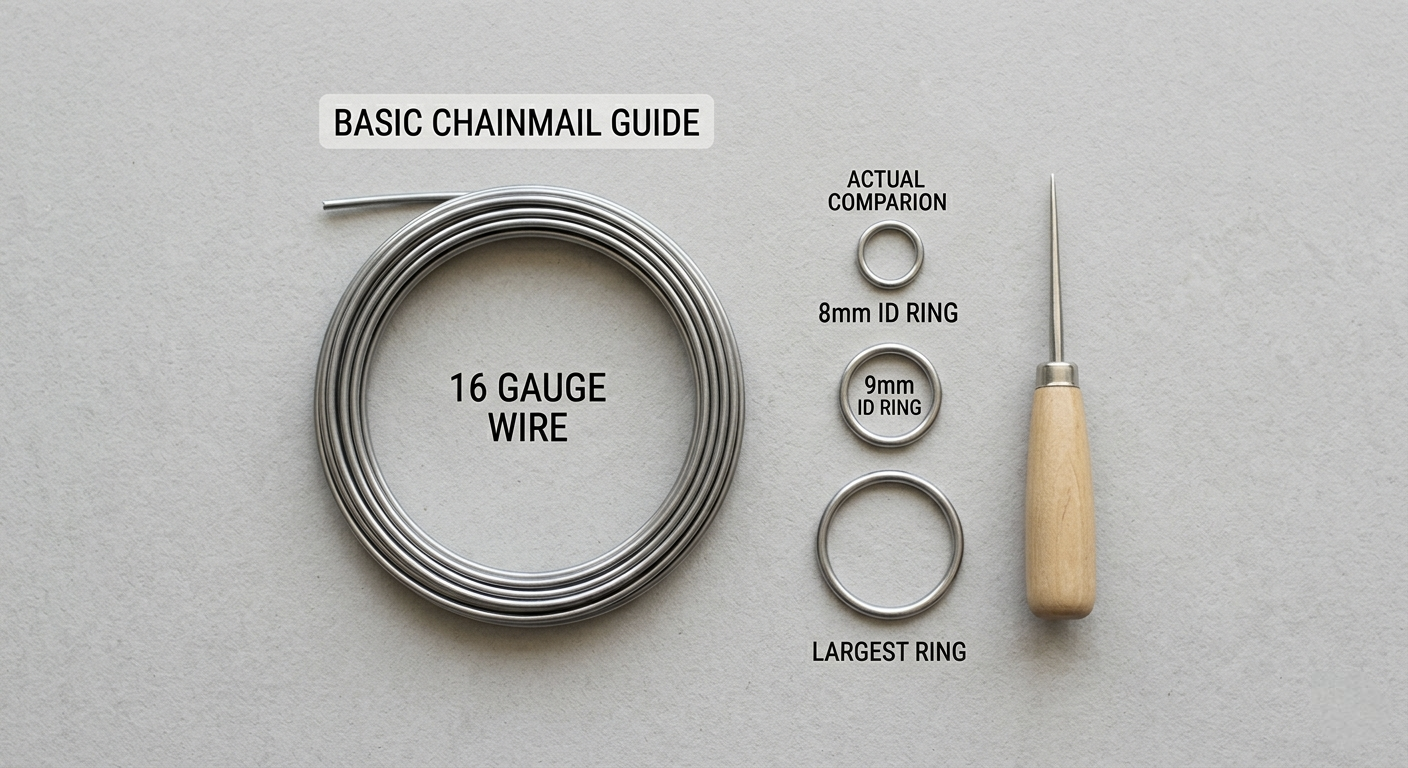
The first thing you need to understand is how wire thickness is measured. In the armor world, wire thickness is referred to as “Gauge” (often written as G). The most important rule to remember here is the inverse rule: The smaller the gauge number, the thicker the wire.
Let’s look at the three most common wire gauges used in medieval chainmail today:
-
16 Gauge (approx. 1.6mm thickness): This is the heavy-duty heavyweight champion. It provides incredible structural integrity and historical realism. If you are participating in full-contact medieval combat or heavy reenactments (like SCA or HEMA), 16G steel is the gold standard because it can absorb brutal weapon impacts without warping.
-
17 Gauge (approx. 1.4mm thickness): This is the ultimate sweet spot for many modern practitioners. It offers fantastic battlefield durability while shedding a significant amount of dead weight compared to a 16G shirt. It gives you an authentic look and feel without completely exhausting your shoulders during an all-day festival.
-
18 Gauge (approx. 1.2mm thickness): This is the lightweight option. While 18G steel can be woven into beautiful, tight patterns for display or costume use, it is generally considered too thin for heavy full-contact combat unless it is made from highly specialized spring steel. However, for aluminum mail, 18G is excellent for casual renaissance faires and high-mobility cosplay.
Demystifying Ring Sizes: Internal Diameter Matters
Once you know how thick the wire is, the next step is looking at the ring size. In armor making, ring size refers to the internal diameter (ID) of the ring, usually measured in millimeters. The two most popular standards you will find are 8mm and 9mm.
-
8mm Rings: Smaller rings create a much tighter, denser protective weave. This means there are fewer gaps in your armor, making it visually stunning and incredibly authentic. The only trade-off is that a smaller ring diameter requires significantly more rings to make a full shirt, which increases both the labor cost and the overall weight.
-
9mm Rings: Larger rings mean the weave is slightly more open. A 9mm shirt requires fewer rings to complete, making it slightly lighter on your body and more budget-friendly. It still provides an excellent historical silhouette and great protection, making it a highly popular choice for reenactors who value mobility.
💡 Pro-Tip For True Reenactors: When matching gauge and ring size, balance is everything. A 16G wire with an 8mm ring creates an incredibly dense, virtually indestructible, but very heavy shirt. If you want a perfectly balanced, mobile, and historically accurate fit, a 16G or 17G wire paired with a 9mm ring offers the perfect blend of defense and comfort. Check out our hand-crafted Riveted Mild Steel Hauberks to see this perfect balance in action.
How to Choose the Right Specs for Your Mission
To make your final buying decision incredibly simple, find your category below:
-
The Full-Contact Combatant (HEMA / SCA / Live Steel): Go with 16 Gauge or 17 Gauge Riveted Steel. Stick to an 8mm or 9mm ring size. You need the raw thickness and strength of heavy wire to ensure your links do not burst under a sword strike.
-
The Dedicated Reenactor & Living Historian: Go with 17 Gauge Riveted Steel with a 9mm ring size. This combination gives you the exact historical look, drape, and weight distribution you need to look authentic while allowing you to march for miles without destroying your back.
-
The Cosplayer & Casual Festival Goer: Go with 18 Gauge Aluminum or Butted Steel. It keeps the cost low, the weight incredibly light, and allows you to enjoy your event in absolute comfort without worrying about historical combat specifications.
Conclusion: Knowledge is Your Best Armor
Understanding wire gauges and ring sizes helps you look past the basic marketing and buy a piece of gear tailored perfectly to your lifestyle. Don’t just buy the first chainmail shirt you see online. Think about your physical strength, your activities, and your budget, and invest in a specification that makes you feel powerful, protected, and completely authentic.
⚔️ Experience True Historical Craftsmanship Whether you need a heavy-duty 16G combat shirt or a perfectly balanced 17G hauberk, Armor Medieval builds the premium quality gear you can trust with your life. 🚀 [Shop Armor Medieval Today & Claim Your Battle Gear]