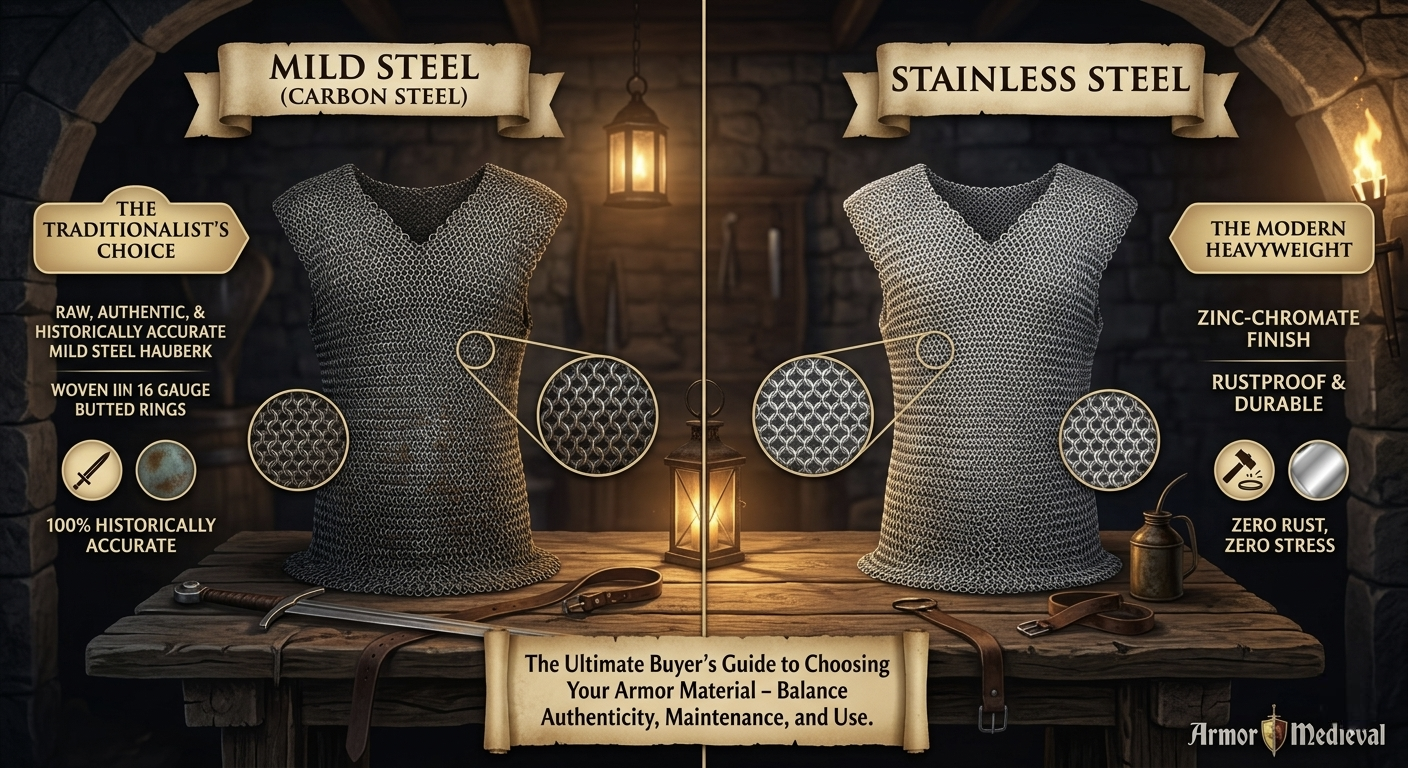
The Ultimate Buyer’s Guide to Choosing Your Armor Material
When you decide to invest in a piece of medieval chainmail—whether it is a full-length combat hauberk, a protective coif, or a historical aventail—one of the biggest decisions you will face isn’t just about the wire gauge or the ring size. It comes down to the actual metal the armor is made from.
As you browse through different options, you will consistently run into two major choices: Mild Steel (Carbon Steel) and Stainless Steel. To the untrained eye, a freshly polished mild steel shirt and a stainless steel shirt look almost identical. However, their prices, maintenance needs, and how they perform on the field are completely different. Choosing the wrong metal can mean spending your weekends scrubbing away rust or accidentally buying gear that doesn’t fit your reenactment group’s rules. Let’s break down the pros and cons of both materials in simple, realistic terms so you can make the perfect choice.
Looking for the Perfect Battle-Ready Kit? Whether you prefer the raw historical accuracy of mild steel or the stress-free durability of stainless steel, we have you covered. Our handcrafted collections are built to survive real combat impacts. 👉 [Browse Our Premium Chainmail Collection Now]
Mild Steel: The Traditionalist’s Choice
Mild steel (often called carbon steel) is the closest modern equivalent to what real medieval knights and warriors actually wore on the battlefield centuries ago.
The Pros of Mild Steel:
-
100% Historically Accurate: If your main goal is absolute realism, mild steel is the undisputed king. It moves, looks, sags, and feels exactly like genuine medieval armor.
-
Beautiful Battle-Worn Look: Over time, with regular use, mild steel develops a gorgeous, dark, authentic patina (aging look) that stainless steel simply cannot replicate.
-
Budget-Friendly: Mild steel wire is easier to source and work with, which makes a high-quality riveted mild steel hauberk much lighter on your wallet.
The Cons of Mild Steel:
-
The Rust Monster: Mild steel loves to rust. If you get caught in a rainstorm at a festival, sweat through a heavy combat session, or store it in a humid room, red rust will begin forming within hours. It requires regular oiling and careful storage.
Stainless Steel: The Modern Heavyweight
Stainless steel is a modern upgrade. By mixing chromium into the steel alloy, the metal becomes virtually immune to the rust and corrosion that destroys traditional armor.
The Pros of Stainless Steel:
-
Zero Rust, Zero Stress: You can sweat in it, fight in the pouring rain, and throw it straight into your gear bag without a single worry. It requires almost zero maintenance—no messy oils or constant scrubbing needed.
-
Incredible Strength: Stainless steel is significantly tougher and stiffer than mild steel. A stainless steel ring can absorb brutal weapon impacts without bending open or throwing rivets, making it practically indestructible.
-
Always Shiny and Clean: It maintains a bright, clean, premium metallic finish that looks exceptionally striking under the sun or stage lights.
The Cons of Stainless Steel:
-
Lack of Historical Accuracy: Stainless steel did not exist in the Middle Ages. For strict living-history groups or high-end historical reenactments, stainless steel might be banned due to its modern chemical composition and overly bright look.
-
Higher Investment: Because stainless steel wire is highly rigid, it is much harder on the armorer’s tools and takes more effort to rivet. This extra labor drives up the crafting cost.
Pro-Tip For Smart Buyers: If you love the low maintenance of stainless steel but need a historically accurate look, look for Darkened or Blackened Stainless Steel. It gives you all the rustproof benefits while mimicking the dark, menacing look of historical carbon steel. Check out our premium Hand-Riveted Blackened Hauberks for the ultimate compromise. 🛒 [Shop Our Best-Selling Riveted Hauberks – Free Shipping]
The Final Verdict: Which One Should You Buy?
To make your final buying decision incredibly simple, just pick the option that matches your primary activity below:
-
Choose Mild Steel If: You are a dedicated living historian, a strict reenactor (SCA/HEMA), or a collector who values historical accuracy above everything else. If you don’t mind the ritual of oiling your gear to keep it pristine, mild steel will give you the most authentic experience possible.
-
Choose Stainless Steel If: You are an active LARPer, a stage performer, a casual festival-goer, or a practical fighter. If you want a piece of armor that is always ready to wear, completely rustproof, incredibly strong, and requires no greasy maintenance after a long day in the sun, stainless steel is worth every single penny.
Conclusion: Invest in Gear That Fits Your Lifestyle
There is no single “best” metal—there is only the metal that fits your specific needs, your budget, and how much time you want to spend maintaining it. Whichever path you choose, make sure you invest in a well-woven, correctly gauged shirt that makes you feel powerful, protected, and completely confident.
Experience Flawless Historical Craftsmanship From raw, authentic mild steel to indestructible, modern stainless steel, Armor Medieval builds the high-end battle gear you can proudly trust and pass down through generations. 🛒 [Shop Armor Medieval Today & Claim Your Battle Gear]