How to Wash and Dry Chainmail Tops Without Damaging the Metal
When you spend your hard-earned money on a high-quality chainmail top—whether it is a full-length hauberk, a combat shirt, or a standard mail vest—you want it to last a lifetime. But after a long weekend at a historical reenactment, a grueling HEMA combat session, or an all-day fantasy festival, your armor is naturally going to collect sweat, body oils, and outdoor dirt.
When your gear gets dirty, you can’t just throw it into a standard washing machine or toss it in a clothes dryer. Doing that will destroy both your washing machine and the protective finish of your metal. Washing and drying chainmail requires a specific process to protect the links from bending, scratching, or rusting. Let’s look at how to safely wash and dry your chainmail tops without causing any damage.
Upgrade Your Collection with Premium Gear Tired of cheap replicas that rust or fall apart after one single wash? Invest in authentic, hand-crafted craftsmanship that stands the test of time. Discover our battle-ready collections today. 👉 [Browse Our Full Chainmail Armor Collection Now]
Step 1: Know Your Metal Before You Wash
Before you let any liquid touch your armor, you must know exactly what material your chainmail top is made of. The cleaning process completely changes depending on the metal:
-
Anodized Aluminum: This modern metal is incredibly forgiving. It does not rust, meaning you can use water and mild liquid soap safely to break down grease and body oils.
-
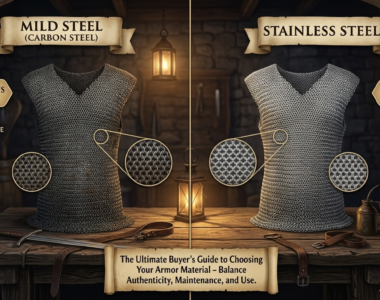
High-Carbon or Mild Steel: This is authentic, historical steel. It absolutely hates water. If your steel top is covered in rust, you should avoid water entirely and use dry abrasives like play sand in a barrel or chemical rust-removers like WD-40. However, if it just has stubborn mud or grime that requires a wet wash, you must follow a strict fast-drying protocol.
Step 2: How to Wash Your Chainmail Top Safely
If your aluminum top is dirty, or your steel top has heavy battlefield grime that needs a wet clean, here is the safest way to do it by hand:
-
Use a Large Plastic Tub: Fill a heavy-duty plastic tub with lukewarm water. Never use harsh chemical bleach or strong laundry detergents, as they can strip away the protective finish or dark oil coating of the steel. Stick to a mild, pH-neutral dish soap.
-
Agitate by Hand: Submerge the chainmail top and agitate it gently with your hands. Let the rings rub against each other naturally to dislodge caked-on mud and sweat. For stubborn spots, use a soft-bristled nylon brush.
-
Rinse Thoroughly: Drain the soapy water and rinse the top multiple times with clean, cold water until all soap residue is completely gone. Leftover soap can trap atmospheric moisture and cause micro-rust later on.
Step 3: The Golden Rule of Drying (The Real Lifesaver)
Washing your chainmail is the easy part—drying it safely is where most people ruin their armor. Trapped moisture between overlapping rings is the absolute number one cause of rust and corrosion.
-
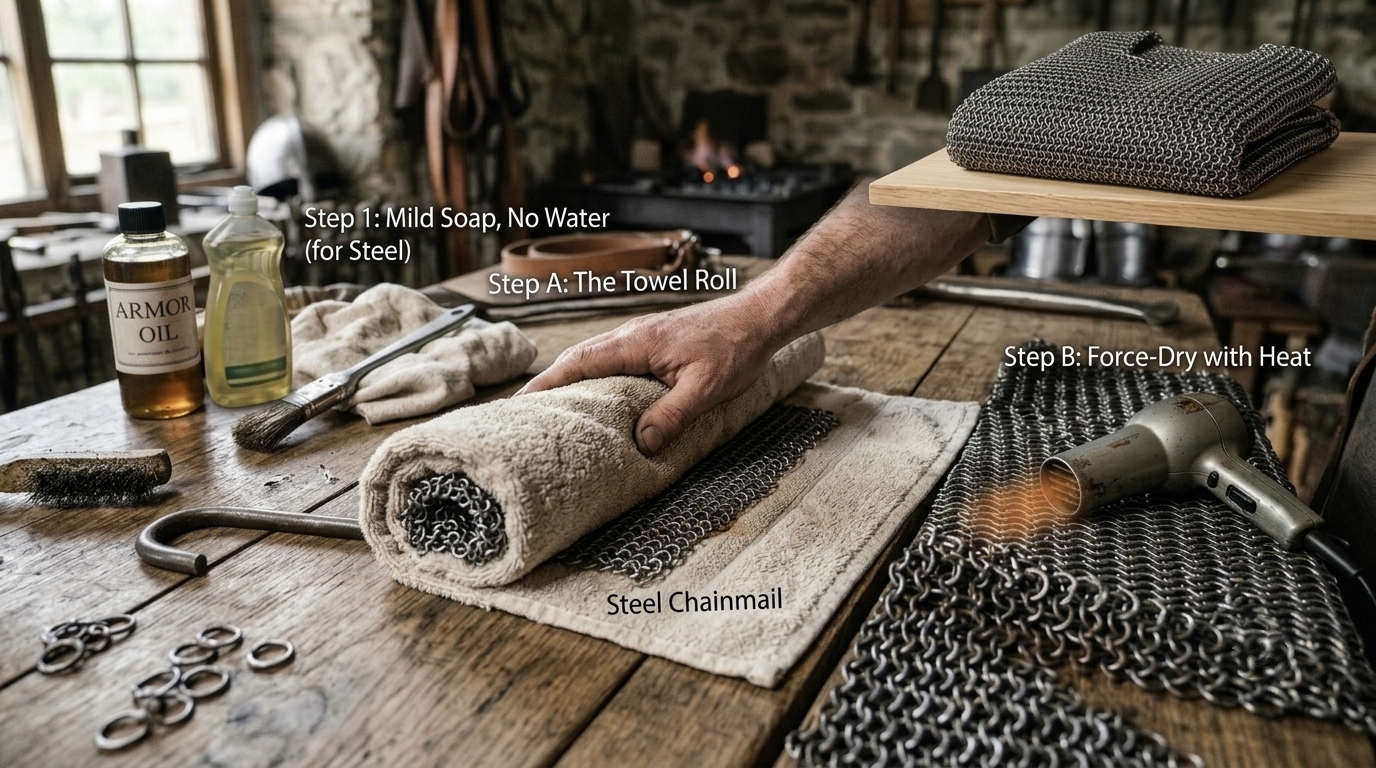
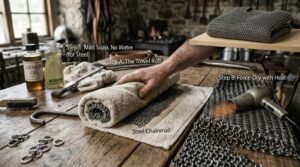
Step A: The Towel Roll Never hang a dripping wet chainmail top on a clothesline. The immense weight of the water combined with the heavy steel rings will stretch out the shoulders and warp the entire garment. Instead, lay a large, heavy bath towel flat on the floor. Place your wet chainmail top on it, and roll the towel up tightly with the armor inside. Press down firmly so the towel absorbs the heavy surface water. Repeat this with a second dry towel if necessary.
-
Step B: Force-Dry with Heat Once the excess water is gone, lay the chainmail flat on a clean surface. Grab a standard hair dryer, set it to a warm or high-heat setting, and blow-dry the entire top. Make sure you target the underarms, the neck area, and the tightly woven overlapping sections. Keep blowing until the metal is 100% bone-dry to the touch.
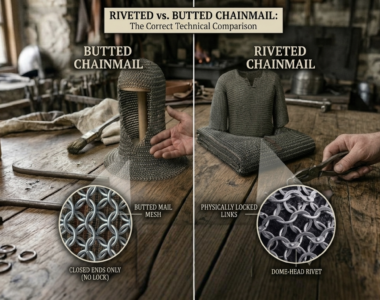
Pro-Tip for Long-Term Armor Protection: If you want to spend less time scrubbing rust and more time enjoying history, it all starts with the right gear. Our hand-riveted mild steel hauberks are built to lock out debris and hold protective oils perfectly. 🛒 [Get Your Battle-Ready Riveted Hauberk Today – Free Shipping]
Step 4: Post-Wash Oiling and Protection
If you just washed a steel chainmail top, the fresh water has stripped away its protective oil barrier. If you store it like this, it will start oxidizing within 24 hours.
As soon as the top is dry, place it inside a clean plastic bag, add a few drops of mineral oil or specialized gun oil (like Ballistol), and massage the bag thoroughly so every single ring gets a micro-coat of protection. Wipe off any heavy excess with an old cotton t-shirt before storing it flat in a breathable cloth bag.
Conclusion: Maintenance is Part of the Tradition
Taking proper care of your armor is just as important as knowing how to wear it into battle. By taking the time to hand-wash your chainmail tops correctly and ensuring they are completely force-dried and oiled immediately after, you protect your financial investment and keep your historical kit looking flawless for your next event.
Claim Your Authentic Historical Kit From heavy battlefield steel to lightweight costume armor, Armor Medieval provides the historic accuracy and premium quality you can count on. 🚀 [Shop Armor Medieval Today & Experience True Craftsmanship]