
The Ultimate Guide to the History, Mechanics, and Legacy of Medieval Armor
When you think of medieval armor, one image likely comes to mind: the glint of steel or iron, meticulously crafted into interlocking rings forming a chainmail shirt. But beyond the poetic imagery, this iconic piece of armor wasn’t just for show—it saved countless lives during centuries of war and conflict.
Chainmail, a type of armor consisting of small metal rings linked together in a pattern, dates back to the 3rd century BC, though it reached its peak popularity during the medieval period. Known for its flexibility and effectiveness, the chainmail shirt (often referred to as a “hauberk”) was a game-changer for warriors, knights, and soldiers, providing them with much-needed protection against a wide array of weapons.
But just how effective was it, and why did it last for so long? Let’s take a deeper look at the history, mechanics, and legacy of the chainmail shirt—and answer some of the most common questions surrounding this ancient piece of armor.
Looking for Authentic Battle-Ready Kit? Experience history firsthand with our premium, hand-crafted armor collections. Built with meticulous attention to detail, our gear is designed for true historical weight and unmatched battlefield durability. 👉 [Browse Our Full Chainmail Armor Collection Now]
What is Chainmail?
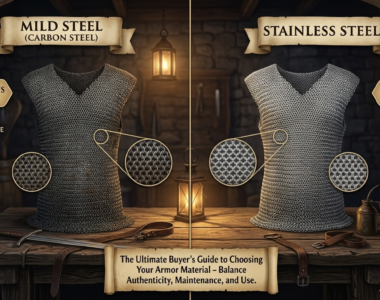
Chainmail, often referred to as “mail,” consists of thousands of small metal rings woven together in a pattern that creates a mesh-like structure. While the exact material could vary (steel, iron, and later, aluminum), the typical chainmail shirt would be made from iron or steel rings. The rings were interwoven in a way that allowed the armor to move with the wearer, offering protection while still permitting a degree of agility.
The chainmail shirt, or hauberk, covered the torso and often extended to the knees or even the wrists. Some versions featured a hood (coif) to protect the head, while others were designed as tunics that were worn over other armor or clothing.
How Did Chainmail Work?
The key to chainmail’s effectiveness lies in its design. The interlocking rings were arranged so that each ring was linked to four others, creating a dense, tough fabric. When an attack, like a sword strike or an arrow, landed on the armor, the force of the impact was spread across multiple rings, preventing the sharp edge or point from piercing the skin.
Here’s how it worked:
-
Cut Protection: The rings offered excellent resistance to slashing and cutting blows, such as those from swords, axes, or daggers.
-
Blunt Force Resistance: While not as effective against blunt trauma (like hammer strikes), chainmail could still absorb some of the shock, reducing the severity of the impact.
-
Flexibility: Unlike plate armor, which was rigid and heavy, chainmail allowed for greater flexibility and ease of movement, which was crucial for combat situations that demanded agility.
Why Was It So Popular?
-
Affordability: Compared to plate armor, which required expensive metalworking and was often reserved for knights or wealthy warriors, chainmail was more affordable and could be mass-produced. It was also easier to repair in the field, making it accessible to soldiers of all ranks.
-
Versatility: It could be worn by anyone, from common foot soldiers to high-ranking knights. Chainmail also could be worn over other armor, providing an extra layer of protection.
-
Mobility: Unlike the heavier plate armor, chainmail did not restrict movement as much, which was vital in combat scenarios that required mobility, such as cavalry charges or infantry skirmishes.
-
Durability: Chainmail was remarkably resilient, with many surviving examples still in existence today—some even being passed down through generations as heirlooms.
When Was the Chainmail Shirt Used?
Chainmail was used from the 3rd century BC and continued to be worn well into the early modern period (about the 16th century). Here’s a brief timeline of its use:
-
Ancient Origins (300 BC): Evidence suggests that chainmail-like armor was used by ancient Celtic tribes and Hellenistic armies. However, it was during the early Middle Ages that chainmail became more widely used in Europe.
-
Medieval Period (5th-15th century): The most iconic period of chainmail use, especially among knights and warriors during the height of medieval warfare. It was worn by soldiers during the Crusades, Viking raids, and throughout European and Middle Eastern conflicts.
-
Early Modern Era (16th century): As firearms and gunpowder-based weapons became more common, chainmail began to be phased out in favor of plate armor, which offered better protection against bullets and crossbow bolts.
Pro-Tip For True History Enthusiasts: To counter the limitations against thrusting weapons and heavy blunt force, warriors always paired their mail shirts with padded garments underneath (called an aketon or gambeson). This absorbent layer kept the metal rings from smashing directly into the skin during a strike! 🛒 [Get Your Premium Battle Gear Today – Free Shipping]
How Effective Was Chainmail in Combat?
While chainmail was highly effective against slashing and cutting weapons, it wasn’t perfect. Its ability to stop stabbing or thrusting weapons—like spears or arrows—was limited. The small gaps between the rings could allow a point to pierce through the armor, causing injury. Additionally, chainmail was less effective at absorbing blunt force trauma compared to plate armor, though it still provided some level of protection.
To counter these limitations, warriors often wore padded garments (called “aketon” or “gambeson”) underneath their chainmail, which absorbed some of the impact from blows and prevented the rings from pressing directly against the skin.
Legacy and Modern Use
While chainmail is no longer a standard form of armor in modern warfare, its legacy remains in various forms. For example, the “chainmail” shirts worn by medieval reenactors are crafted to resemble the original pieces of armor. Additionally, chainmail is still used in specific fields like modern-day cut-resistant gloves, often used in industries such as butchery, fishing, and police work.
FAQ About Chainmail Shirts
1. Was chainmail armor heavy?
Chainmail shirts weren’t necessarily as heavy as plate armor, but they could still weigh anywhere from 15 to 30 pounds, depending on the length and material. However, their flexibility meant that the weight was more evenly distributed, making them easier to wear and move in than solid plates of metal.
2. Could a sword cut through chainmail?
Chainmail was designed to prevent slashing or cutting injuries, but a sword could still cause damage. The chainmail would absorb much of the force, but if the sword was struck with enough force or if the blade was particularly sharp, it could slip between the rings, potentially causing injury.
3. Did chainmail protect against arrows?
Chainmail provided some protection against arrows, but it wasn’t perfect. The effectiveness of chainmail against arrows depended on the arrow’s point, the type of bow, and the thickness of the rings. In some cases, arrows could pierce chainmail, especially those shot from longbows, which had much more force than shortbows.
4. Was chainmail armor expensive?
Compared to plate armor, chainmail was more affordable. It was made from individual rings that were woven together, making it easier to produce in bulk. That’s why it was used by both common soldiers and knights during the medieval period.
5. How did warriors maintain their chainmail?
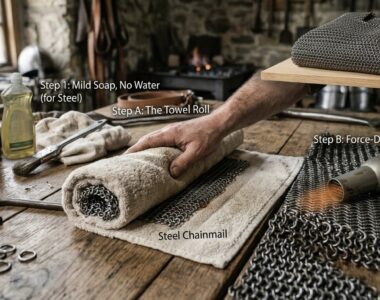
Chainmail required regular maintenance, including cleaning to prevent rust and occasional repairs when rings became damaged or broken. Given its widespread use, soldiers often carried extra rings or small tools to make repairs in the field.
Conclusion: Invest in True Craftsmanship
At the end of the day, your armor tells a story about your passion for history. Whether you need a full hauberk, a coif, or an authentic mail shirt, investing in premium gear guarantees the perfect balance of historical accuracy and long-term durability.
Experience Flawless Historical Quality Don’t let cheap replicas ruin your historical experience. Armor Medieval delivers the premium craftsmanship, weight, and reliability you deserve to command respect in any shield wall. 🚀 [Shop Armor Medieval Today & Experience True Craftsmanship]